Thinking about buying on the water in Little River? The view may grab your attention first, but the real value often comes from what sits behind it: marina access, HOA rules, rental limits, and monthly costs that can change the deal more than the floor plan. If you want a condo or townhome here, you need more than a quick showing. You need a clear picture of how Little River waterfront ownership actually works. Let’s dive in.
Why Little River Stands Out
Little River has a different feel than many other Grand Strand waterfront areas. It is a census-designated place in Horry County with 11,711 residents, a 76.6% owner-occupied housing rate, and a median owner-occupied home value of $305,800 according to U.S. Census QuickFacts. That helps explain why many buyers experience it as a residential, marina-centered community rather than a pure resort market.
Because Little River is not a separate municipality, Horry County rules are a key part of ownership, especially if you plan to rent your property. That matters for buyers who want a second home, occasional rental use, or an investment angle. In short, the local rules can be just as important as the location on the water.
Waterfront Homes Here Look Different
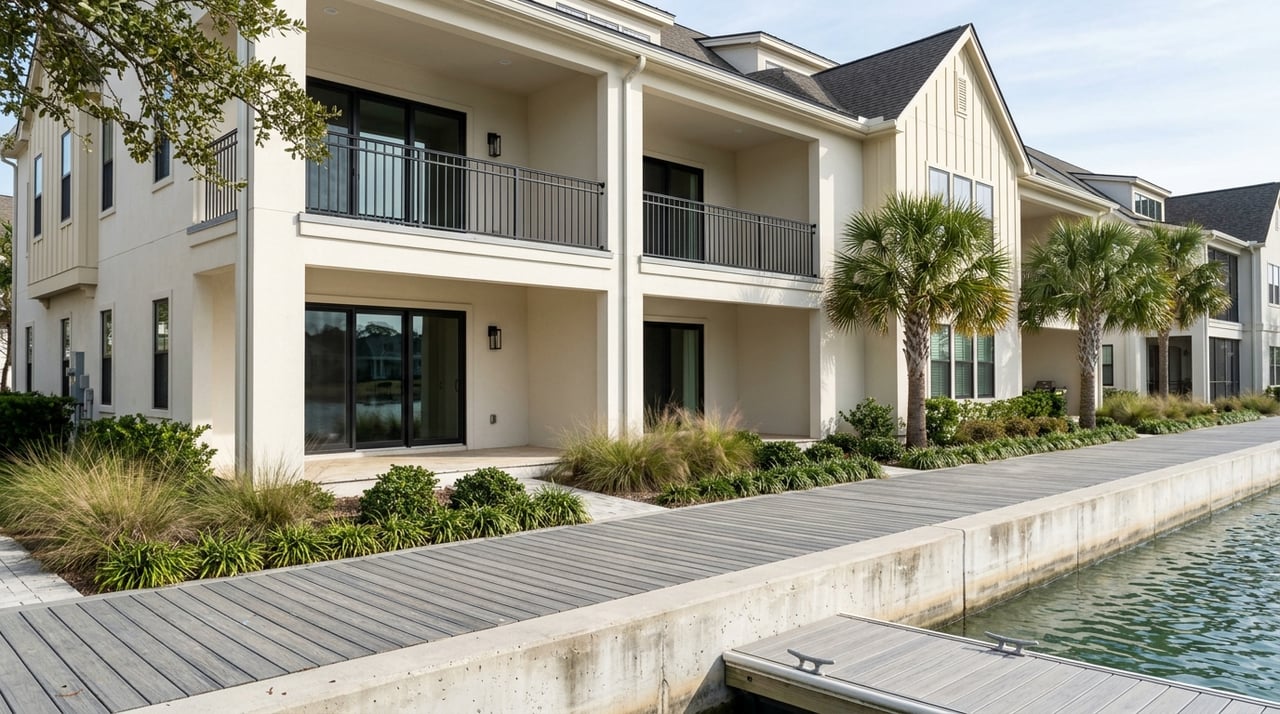
If you picture high-rise oceanfront towers, Little River may surprise you. Much of the waterfront inventory is made up of low-rise condos and condo-townhome communities near the Intracoastal Waterway and marina areas. This gives the area a more tucked-in, boat-oriented feel.
The marina cluster in and around Little River includes Coquina Harbor, Cricket Cove, Lightkeepers Marina, Mariner’s Pointe, and Myrtle Beach Yacht Club, based on the South Carolina Department of Environmental Services marina inventory. For many buyers, that concentration is a big reason to look here. You are often buying into a water-access lifestyle, not just a unit with a nice view.
Marina Access Can Drive Value
In Little River, waterfront value is often tied to boating access. Lightkeepers Marina says it sits on the Intracoastal Waterway at Coquina Harbor and is 5.4 miles from Little River Inlet with no bridges. Cricket Cove Marina says it is the closest marina in the Myrtle Beach area to the Little River Inlet.
That kind of access matters if you plan to keep a boat nearby or want the convenience of getting out on the water more easily. It also affects how buyers compare one community to another. A unit with practical boat access may feel very different from one that only offers a water view.
Do Not Assume a Boat Slip Comes With It
One of the biggest mistakes buyers make is assuming the condo and the boat slip are automatically bundled together. In Little River, that is not always the case. Some communities separate the unit from the dock rights in ways that can affect both price and long-term use.
For example, Lighthouse Pointe at Lightkeepers Village lists 122 condominium units and 25 deeded boat slips. That means not every unit owner has a slip. At Mariner’s Pointe, dock spaces are leased on a one-year basis, and a waiting list may apply.
This is why you should always verify whether a slip is:
- Deeded to the property
- Leased separately
- Subject to a waiting list
- Transferable at closing
- Limited by boat size or other marina rules
If the slip is not guaranteed, the waterfront premium may not mean what you think it means. A beautiful unit near the marina and a unit that includes dependable dock access can be two very different purchases.
HOA Costs Need a Closer Look
Waterfront condos and townhomes in Little River often include more shared features than inland communities. That can be convenient, but it can also make monthly ownership costs harder to compare at first glance. Two properties with similar list prices may have very different total carrying costs.
The Yacht Club at Lightkeepers Village, for example, lists amenities such as a pool, clubhouse, tennis, trash service, water and sewer, and basic cable. Other communities may include different mixes of common-area maintenance, insurance, utilities, security, or dock-related responsibilities.
When you review an HOA or condo association, ask what the monthly dues actually cover. Look closely at items like:
- Water and sewer
- Basic cable or internet
- Building or common-area insurance
- Pool and clubhouse upkeep
- Dock or marina maintenance
- Trash service
- Security features
A lower monthly HOA fee is not always the better value. If another community includes more services or marina-related costs, the total ownership picture may be stronger.
Shared Waterfront Assets Mean More Due Diligence
Waterfront communities often carry more maintenance responsibility than a standard townhome complex. Docks, boardwalks, bulkheads, marina systems, and other shared assets can be costly to maintain or repair. That is why reserve strength and special-assessment risk deserve extra attention when you buy.
Mariner’s Pointe rules show how structured some of these communities can be. The association can correct unsafe conditions and charge the owner, and dock space is handled through a formal leasing system. Details like that make it especially important to review the governing documents before you commit.
A strong due-diligence review should include:
- HOA or condo declaration
- Marina or dock rules
- Recent meeting minutes
- Budget and reserve information
- Any pending or recent special assessments
- Rules on owner and guest use of shared waterfront features
Rental Plans Need Three Layers of Approval
If you hope to rent out your Little River condo or townhome, do not stop after checking one rule source. Short-term rental eligibility can depend on state law, county registration and tax requirements, and the individual HOA or condo documents. One layer does not override the others.
South Carolina’s Vacation Rental Act defines a vacation rental as a lease for fewer than 90 days and requires a written vacation rental agreement. The law also says a buyer takes title subject to any existing vacation rental agreement for periods beginning within 90 days after the deed is recorded. That means you should ask for the rental calendar before closing if the seller has future bookings.
In unincorporated Horry County, the county’s short-term rental workflow shows that owners must obtain a state sales tax number, file the required state forms, set up a county hospitality or accommodations account, and obtain a county business license. Horry County also states that a business license is required for businesses in unincorporated areas.
On top of that, the HOA may be stricter than state or county rules. A local Horry County HOA example, Waterway Cove, says rentals are capped at 15% of homes and require board approval before any lease is executed. Even though that is not a waterfront example, it shows how much community rules can shape what you are allowed to do.
Short-Term Rentals Affect Taxes Too
Rental use can change your tax and compliance responsibilities. The South Carolina Department of Revenue says accommodations rented for less than 90 consecutive days are subject to 5% sales tax plus 2% accommodations tax, along with any applicable local sales and use tax. Horry County also adds a 3% hospitality fee outside city limits on gross proceeds from transient accommodations.
For buyers considering occasional rentals, this is an important budgeting issue. Gross rental income does not equal net income, and compliance steps can add time and cost. If rental flexibility is part of your plan, it should be reviewed before you make an offer, not after closing.
Price Positioning in the Grand Strand
Little River can also appeal to buyers looking for a waterfront entry point that may be priced below busier nearby markets. According to the Coastal Carolinas Association of REALTORS® March 2026 market update, the year-to-date median sales price for Little River townhouse and condo sales was $184,000. That compares with $195,000 in Myrtle Beach and $317,000 in North Myrtle Beach.
Inventory was smaller too, with 225 condo units in Little River versus 1,475 in Myrtle Beach and 634 in North Myrtle Beach. For buyers, that can suggest a smaller and less saturated market than some larger oceanfront areas. It does not guarantee value, but it does help frame why Little River attracts attention from both lifestyle buyers and budget-conscious waterfront shoppers.
What to Focus on When Comparing Properties
When you tour waterfront condos and townhomes in Little River, try to look beyond the finish level alone. In this market, several factors can matter more than bedroom count or cosmetic updates. The right comparison depends on how you plan to use the property.
Pay close attention to:
- Direct waterway or marina views
- Deeded versus leased slip access
- HOA coverage and monthly dues
- Reserve strength and assessment risk
- Rental rules and approval process
- County licensing and tax requirements for short-term rentals
- Distance and ease of access to the inlet or Intracoastal Waterway
These details help you understand the real ownership experience. They also help you avoid paying a premium for features that may be limited, shared, or controlled separately from the unit itself.
Buying Smart in Little River
A waterfront condo or townhome in Little River can offer a very appealing mix of marina atmosphere, Intracoastal access, and a more residential pace than some nearby coastal markets. But the best purchase usually comes from asking the right questions early. Slip rights, HOA structure, rental restrictions, and county compliance can all affect whether a property fits your goals.
If you want a place that works for boating, part-time living, full-time ownership, or occasional rental use, local detail matters. Working with a neighborhood-focused agent can help you compare communities clearly and spot issues before they become expensive surprises. If you’re exploring waterfront opportunities in Little River, connect with Larisa Esmat for local guidance tailored to your goals.
FAQs
What makes Little River waterfront condos different from oceanfront condo markets?
- Little River waterfront condos and townhomes are often low-rise, marina-centered communities near the Intracoastal Waterway rather than large oceanfront towers, which creates a more boat-oriented ownership experience.
What should buyers ask about boat slips in Little River condo communities?
- You should ask whether the slip is deeded, leased, waitlisted, transferable at closing, and subject to any size, insurance, or use restrictions.
What HOA details matter most when buying a Little River waterfront townhome or condo?
- Focus on what the dues cover, the condition of shared waterfront assets, reserve funding, any special-assessment history, and the rules that apply to docks, guests, rentals, and common areas.
What are the short-term rental rules for a condo in Little River, South Carolina?
- You need to check three levels: South Carolina vacation rental law, Horry County licensing and tax requirements for unincorporated areas, and the specific HOA or condo rules for the community.
How do short-term rental taxes work for Little River condos?
- For stays under 90 consecutive days, South Carolina applies 5% sales tax plus 2% accommodations tax, and Horry County adds a 3% hospitality fee outside city limits on transient accommodations.
How do Little River condo prices compare with nearby markets?
- The Coastal Carolinas Association of REALTORS® reported a year-to-date median townhouse and condo sales price of $184,000 in Little River, compared with $195,000 in Myrtle Beach and $317,000 in North Myrtle Beach in its March 2026 market update.